Note 04 · 12 min · The cables · Backhaul
Fibre backhaul: how the cells reach the world.
A reading of the route a packet takes from a Limassol handset to a Frankfurt data centre — eight submarine cables, two landing stations, one inland fibre ring, and a thousand cell sites.

Nicosia · November 2025
A mobile cell is only as fast as the back-haul that connects it to the wider network. The user experience of a 5G handset in central Limassol — fast download, fast page load, fast video start — depends, in the last analysis, less on the radio than on the fibre that runs from the cell base station to the operator's core, and from the core to the international gateway, and from the gateway through the submarine cable to the European interconnection points. The radio gets the attention; the fibre does the work.
The submarine landings
Cyprus is, at the time of writing, served by eight active commercial submarine cable systems. The principal landings are at two sites: Yeroskipos on the south-west coast (Paphos district) and Pentaskhinos on the southern coast (Larnaca district). The systems include older copper-and-coaxial cables that have been retired or downgraded, and modern optical systems that carry the bulk of the present traffic. The active optical systems include connections to the Egyptian and Lebanese landings to the south and east, and to the Greek and Italian landings to the north and west — through which the European internet exchange points (principally Frankfurt, Marseille, and Amsterdam) are reached.
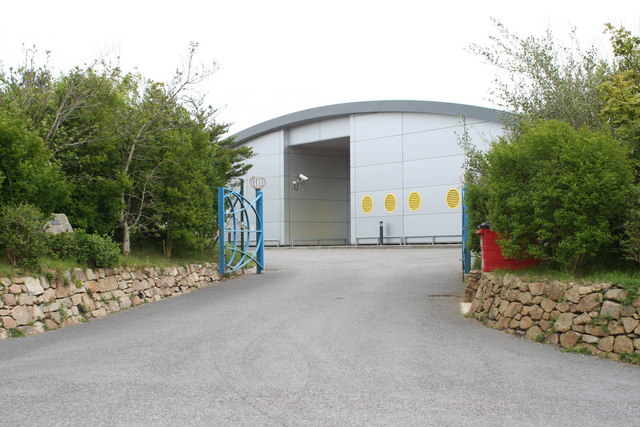
The landing stations themselves are unremarkable industrial buildings — single-storey concrete sheds with backup generation, marine-cable entry pits, and the optical line terminating equipment that converts the submarine signal to inland fibre. The Yeroskipos and Pentaskhinos stations are operated by the principal incumbent and are interconnected, through redundant inland routes, to the Nicosia core network.
The inland fibre ring
The inland fibre infrastructure of Cyprus is, in topology, a ring with multiple cross-connections. The principal nodes are Nicosia (the largest), Limassol, Larnaca, Paphos, and Polis. The ring runs along the southern coastal corridor (Paphos → Limassol → Larnaca → Ayia Napa), crosses the central plain to Nicosia, and returns via the western route through Polis. Cross-connections at multiple points ensure that no single cable cut leaves a node isolated; the ring is engineered to tolerate any two simultaneous failures along its principal arcs.
The capacity on the inland ring is, by the operators' published filings, in the multi-terabit-per-second range per fibre pair, with multiple pairs in use and significant headroom for the next decade of growth. The ring is shared, on a commercial basis, between the three mobile operators and the principal fixed-line operators; the dark-fibre and lit-capacity arrangements are negotiated bilaterally and are not, in the present journal, public knowledge.
The cell-site fibre
The connection from the inland fibre ring to the individual cell site is, in the modern Cyprus network, almost exclusively fibre. The 2025 figures published by the Department indicate that approximately ninety-six per cent of macro-cell sites on the island are fibre-backhauled; the remaining four per cent — almost all in the rural mountain areas, particularly in the western Troodos — use 80 GHz microwave links to the nearest fibre hand-off point.
The cell-site fibre capacity is sized to the radio capacity of the site. A typical urban 5G macro cell with the full n78 capability is backhauled at 10 gigabits per second, with the option to upgrade to 25 or 40 gigabits as demand grows. Small-cell sites are backhauled at 1 to 10 gigabits, depending on the location and the radio configuration. The fibre is, in the urban areas, routed through municipal duct systems; in the rural areas it follows the road and the electrical-distribution corridors.
The route of a packet
To make this concrete, consider the route a packet takes from a 5G handset in central Limassol to a video-streaming server in a Frankfurt data centre. The packet leaves the handset on the n78 radio; it is received at the local 5G base station; from there it travels on a 10 GbE fibre back-haul approximately two kilometres to the local optical aggregation point; from there approximately fifty kilometres on the inland fibre ring to the Nicosia core; from the core to the international gateway; from the gateway through the operator's submarine-cable capacity (in the typical case, a southern routing via the Egyptian landings) approximately two thousand five hundred kilometres to the Frankfurt internet exchange; and from there approximately one kilometre on the local Frankfurt fibre to the server.
The total round-trip latency for that route, on a normal day, is in the range of fifty-five to seventy milliseconds. Of that latency, approximately thirty milliseconds is the propagation time of the submarine cable (light moves at approximately two-thirds of the speed of light in glass fibre, and two thousand five hundred kilometres at that speed is about twelve and a half milliseconds each way); the remainder is the various queueing, switching, and protocol overheads in the inland network and at the endpoints.
The user experience of "fast 5G" is, in the last analysis, the experience of a packet travelling at two-thirds of the speed of light through fifty kilometres of inland fibre, twenty-five hundred kilometres of submarine cable, and a thousand kilometres of European inland fibre, all in less than seventy milliseconds.
The resilience question
The submarine cable infrastructure is, by the nature of submarine cables, vulnerable to physical damage — ship anchors, seismic events, fishing trawls. The Cyprus operators maintain capacity on multiple cable systems precisely so that the failure of any single cable can be absorbed by re-routing onto the others. The actual cable cuts of the past five years (recorded in the public IEA cable-fault registry) have, on each occasion, been absorbed by re-routing without sustained service degradation.
What the back-haul tells you
Three things, in my reading.
First, the fibre layer is the layer that does the work. The 5G radio gets the attention, but the user experience is dominated, in practice, by the fibre that connects the cell to the world.
Second, the Cyprus position in the Eastern Mediterranean cable network is, in geographic terms, advantageous. The island is on the natural routing path between the European, the African, and the Asian internet — a position that several of the present cable systems take advantage of and that the next generation of planned systems (most notably the 2Africa cable and successors) will continue to use.
Third, the inland fibre ring is the piece of infrastructure that the casual observer never sees but on which everything else depends. The next ten years of mobile network capacity on the island will be determined by the rate at which that inland ring is upgraded.
Researched from the published technical filings of the principal landing-station operators, the TeleGeography submarine-cable map (2024 edition), and the Department of Electronic Communications annual report on fixed transmission infrastructure.